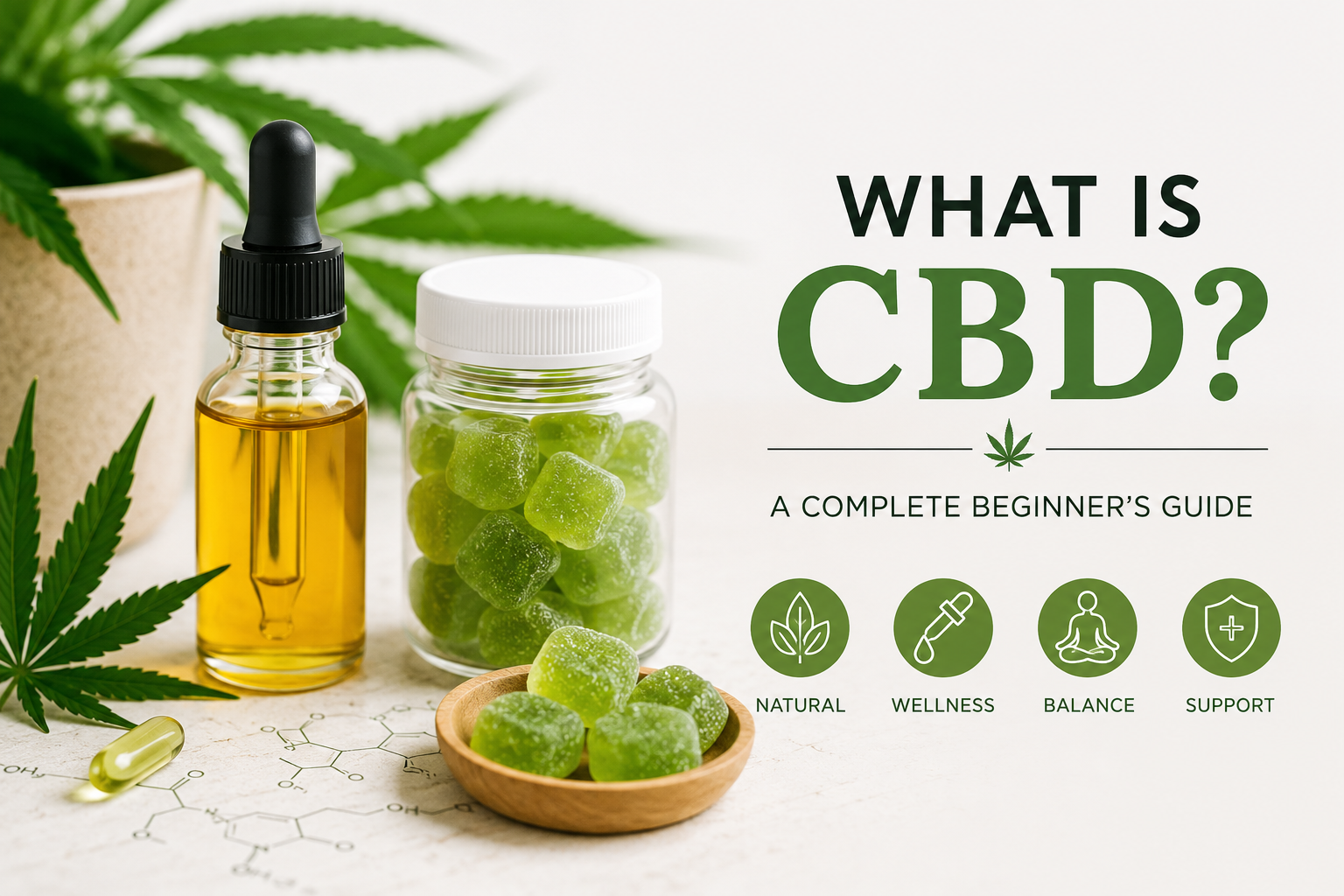
Cannabidiol, commonly known as CBD, is one of the most well-known natural compounds found in the cannabis plant. In recent years, CBD has become increasingly popular as people explore it for wellness purposes, including stress management, sleep support, and general relaxation. Despite its popularity, many beginners are unsure about what CBD is, how it works, whether it is legal, and if it is safe to use.
This guide explains everything you need to know about CBD in simple language, helping you make informed decisions before purchasing or using CBD products.
What Is CBD?
CBD, or cannabidiol, is a naturally occurring cannabinoid found in hemp and cannabis plants. Scientists have identified more than 100 cannabinoids in cannabis, but CBD and THC are the two most widely known.
Unlike THC (tetrahydrocannabinol), CBD does not usually produce the intoxicating effects commonly associated with marijuana. This means most CBD products are used for wellness rather than recreational purposes.
CBD is commonly extracted from industrial hemp because hemp naturally contains very low levels of THC while providing high concentrations of CBD.
Where Does CBD Come From?
CBD is extracted from the flowers, leaves, and stalks of hemp plants. After harvesting, manufacturers use specialised extraction methods to separate CBD from the plant material.
The most common extraction methods include:
- CO₂ extraction
- Ethanol extraction
- Oil extraction
Among these methods, CO₂ extraction is widely considered one of the cleanest because it helps preserve cannabinoids while reducing unwanted impurities.
How Does CBD Work?
The human body contains a biological network called the endocannabinoid system (ECS). This system helps regulate many important functions, including mood, sleep, pain perception, appetite, immune response, and memory.
CBD interacts indirectly with the endocannabinoid system. Unlike THC, it does not strongly bind to cannabinoid receptors. Researchers believe CBD may influence several biological pathways that help maintain balance within the body, although studies are still ongoing.
Scientists continue investigating exactly how CBD works and why different people experience different effects.
CBD vs THC
Although CBD and THC both come from cannabis plants, they are very different compounds.
CBD generally does not cause intoxication or impairment, while THC is responsible for the “high” commonly associated with marijuana.
CBD is primarily used in wellness products, whereas THC is regulated differently depending on local laws and is associated with psychoactive effects.
Understanding this difference helps consumers choose products that match their needs and comply with local regulations.
Types of CBD
CBD products are usually available in three main forms.
Full-Spectrum CBD
Full-spectrum CBD contains cannabidiol along with other naturally occurring cannabinoids, terpenes, flavonoids, and small amounts of THC that remain within legal limits where applicable.
Some researchers suggest these compounds may work together in what is known as the entourage effect, although further research is needed.
Broad-Spectrum CBD
Broad-spectrum CBD contains multiple cannabinoids and terpenes but is generally processed to remove THC.
This option is often preferred by people who want additional hemp compounds without using THC.
CBD Isolate
CBD isolate contains purified cannabidiol without other cannabinoids or plant compounds.
It is often selected by individuals who want products containing only CBD.
Common Types of CBD Products
CBD is available in many different forms to suit individual preferences.
CBD oil is one of the most popular options and is usually taken under the tongue.
CBD gummies provide a pre-measured serving and are convenient for daily use.
Capsules offer an easy way to take CBD without measuring doses.
Topical creams, lotions, and balms are applied directly to the skin.
Some manufacturers also produce CBD beverages, chocolates, skincare products, and soft gels.
Potential Benefits of CBD
Researchers continue studying CBD for a variety of health-related purposes. While early findings are promising in some areas, evidence remains limited for many conditions.
People commonly use CBD for:
- Supporting relaxation
- Managing everyday stress
- Improving sleep quality
- Supporting overall wellness
- Promoting post-exercise recovery
Scientific research is also exploring CBD’s possible role in pain management, inflammation, anxiety, neurological disorders, and other conditions. However, more high-quality clinical studies are needed before firm conclusions can be made.
Does CBD Make You High?
No.
CBD does not usually produce the intoxicating effects associated with THC.
Products made from hemp generally contain only trace amounts of THC that remain within legal limits where applicable. However, consumers should always check product labels because formulations differ between manufacturers.
Is CBD Safe?
Current research suggests CBD has a favourable safety profile for many healthy adults when used responsibly.
However, side effects can occur, including:
- Dry mouth
- Drowsiness
- Fatigue
- Diarrhoea
- Changes in appetite
CBD may also interact with certain medications, including blood thinners and medicines processed by the liver. Anyone taking prescription medication should speak with a healthcare professional before using CBD.
How to Choose High-Quality CBD Products
Product quality varies significantly across the CBD market.
When shopping for CBD, look for products that provide:
- Independent third-party laboratory testing
- Certificate of Analysis (COA)
- Clearly labelled CBD content
- Transparent ingredient lists
- Hemp sourced from reputable growers
- Manufacturing that follows recognised quality standards
Avoid products that make unrealistic medical claims or promise guaranteed results.
How to Read a CBD Label
A quality CBD label should include:
- CBD content per serving
- Total CBD in the package
- Ingredient list
- Batch or lot number
- Expiration date
- Manufacturer information
- Recommended serving size
Many reputable companies also provide QR codes linking directly to laboratory test results.
Is CBD Legal?
CBD laws vary between countries and regions.
Some countries allow hemp-derived CBD products with very low THC levels, while others have stricter regulations.
Before purchasing CBD, always check your local laws regarding:
- THC limits
- Import restrictions
- Product registration
- Age requirements
Frequently Asked Questions
Can beginners use CBD?
Yes. Many people begin with products that provide clearly labelled serving sizes, such as CBD gummies or capsules. Following the manufacturer’s instructions and consulting a healthcare professional is recommended.
Can CBD cure diseases?
No. There is currently no reliable scientific evidence showing that CBD cures diseases. It should not replace prescribed medical treatment.
Can I use CBD every day?
Some people include CBD in their daily wellness routine. Whether daily use is appropriate depends on individual circumstances and medical advice.
Will CBD appear on a drug test?
Pure CBD is generally not the target of standard drug tests. However, products containing THC, even in small amounts, may increase the likelihood of a positive result.
How long does CBD take to work?
The time varies depending on the product. Oils may work more quickly than gummies because gummies must first pass through the digestive system.
Final Thoughts
CBD has become one of the most widely used hemp-derived wellness products worldwide. Although research continues to explore its potential benefits, CBD is not a cure for medical conditions, and scientific evidence remains limited for many health claims.
If you are considering CBD, choose products from reputable manufacturers that provide third-party laboratory testing and transparent ingredient information. Understanding the different types of CBD, knowing how to evaluate product quality, and discussing CBD with a healthcare professional when necessary will help you make informed decisions.
As research continues to develop, CBD is likely to remain an important topic in the health and wellness industry. Staying informed through reliable sources is the best way to understand both its potential benefits and its limitations.
You have not enough Humanizer words left. Upgrade your Surfer plan.
READ MORE:
CBD Gummies for Neuropathy | Benefits, Safety & Research
Refrence article:
Cannabidiol (CBD): What we know and what we don’t by health.harvard.edu/